Saturday, June 8, 2013

Sweet Home Alabama

Okay, this is going to sound crazy to most of you.  On Thursday, we drove hours out of our way to see the small town of Abbeville, Alabama.  Why, you ask?  Because Abbeville, in Henry County, is the home of the 15th Alabama Infantry.  The real 15th Alabama.  The one from the real Civil War.

It's just an ordinary little town, but I was inordinately excited.  I came here not for the sleepy little modern town of about 2,000, but to find the Abbeville of 150 years ago.  I didn't end up talking to anyone here much, though I had planned to, and I think it's because I see the town not in its peaceful, sunny present, but it its tragic, romantic past.  I see a ragtag group of optimistic young farm boys marching off to drive away the Yankee invader.  And most of them never returned.  Crazy, I know, but it was a very powerful experience for me, and I don't think the modern folk of Abbeville would really have understood.

Here's your history post for the day:


The 15th Regiment of Alabama Infantry was a Confederate volunteer infantry unit from the state of Alabama during the American Civil War. Recruited from six counties in the southeastern part of the state, it fought mostly with Robert E. Lee's Army of Northern Virginia, though it also saw brief service with Braxton Bragg and the Army of Tennessee before returning to Virginia for the duration of the war. Out of 1958 men listed on the regimental rolls throughout the conflict, 261 are known to have fallen in battle, with sources listing an additional 416 deaths due to disease, 218 were captured (46 died), 66 deserted and 61 were transferred or discharged. By the end of the war, only 170 men remained to be paroled.

The 15th Alabama is most famous for being the regiment that confronted the 20th Maine on Little Round Top during the Battle of Gettysburg on July 2, 1863. Despite several ferocious assaults, the 15th Alabama was ultimately unable to dislodge the Union troops, and was eventually forced to retreat in the face of a desperate bayonet charge led by the 20th Maine's commander, Col. Joshua L. Chamberlain. This assault was recreated in Ronald F. Maxwell's 1993 film Gettysburg.

  William C. Oates.  The "C" stands for Calvin; he went by "Cal."
The 'G' Company, from Henry County, was formed by William C. Oates, a lawyer and newspaperman from Abbeville. Oates, who would later command the whole regiment at Little Round Top, put together a company composed mostly of Irishmen recruited from the area, calling them "Henry Pioneers" or "Henry County Pioneers". Other observers, after seeing their colorful uniforms (bright red shirts, with Richmond grey frock coats and trousers), dubbed them "Oates' Zouaves".


While details of the specific uniforms worn by other companies of the 15th has not been preserved, Oates' Co. "G" is recorded to have sported, in addition to their red and gray clothing, a "colorful and diverse attire of headgear". Each cap bore an "HP" insignia, which stood for "Henry Pioneers" (though some said it actually meant "Hell's Pelters"). Each soldier also wore a "secession badge", with the motto: "Liberty, Equality and Fraternity", which had been the motto of the French Revolution.


The 15th participated in quite a few battles, the most famous of which was Little Round Top at Gettysburg.


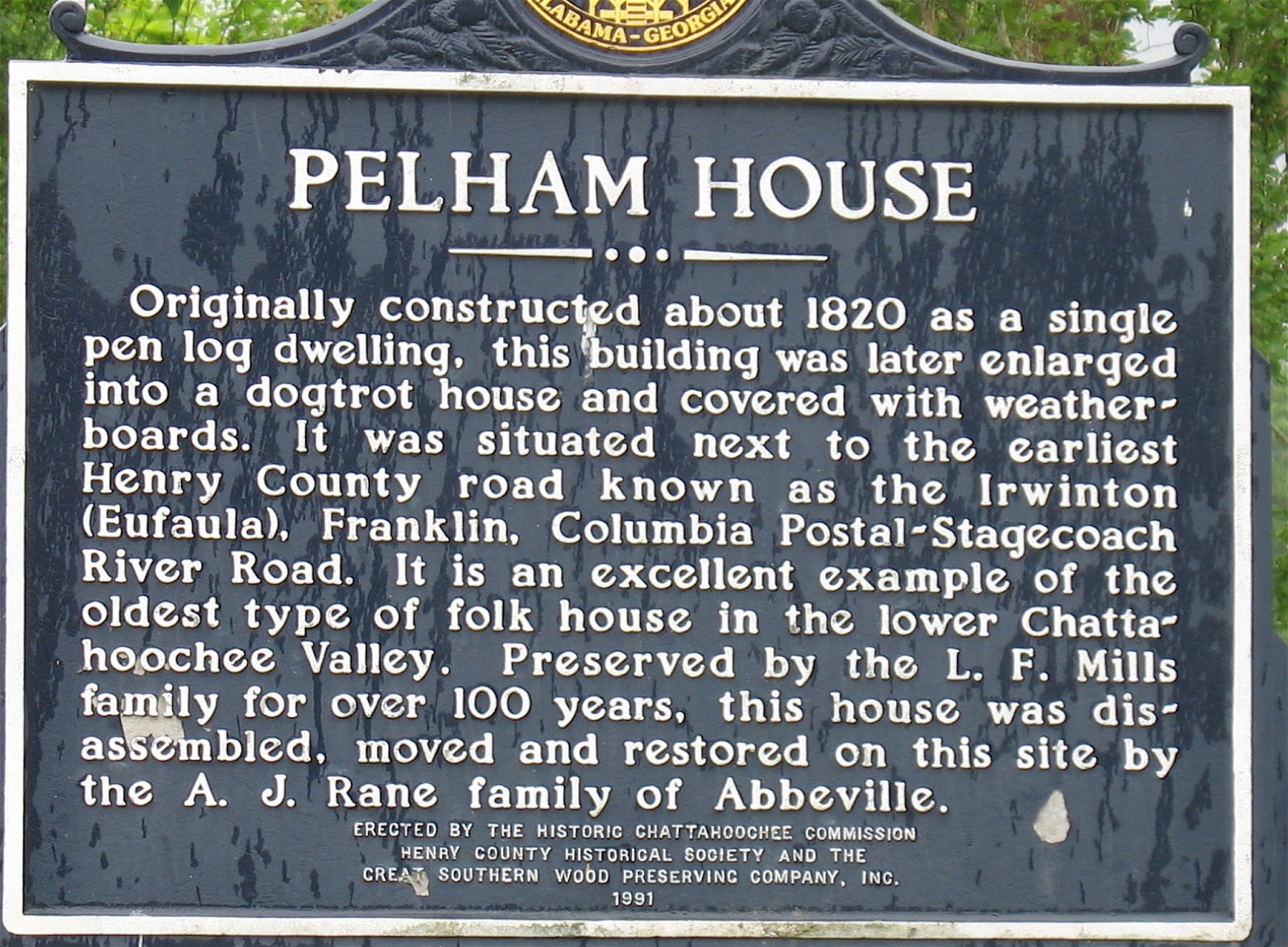
We started out by just driving around.  We came across this old house:


Then we found a war memorial with Calvin Kirkland's name on it.  Calvin Kirkland is Karl's Civil War persona.  He was a 22 year-old farmer who was killed at the Second Battle of Manassas in Virginia.


And check out the name of the main street downtown:


I spent the whole afternoon in the library, and I have a whole bunch of notes on Abbeville history.  If you're interested.


The old Abbeville cemetery is right next to the library.


We took pictures of a bunch of homes, but they're not exciting enough to post.  But as we were driving along a country road, Claire spotted this lovely place and called it "Uncle Rufus' Farm."  I asked her why he got such a nice farm and we didn't.  She said that Calvin is a carpenter, and I guess if I'm making up the rules of this game, then I'd better play along!


We decided this one is Captain Brock's house.  Doesn't it look Captain-y?


Country road.  It actually looks  a lot like Washington here, except for pine trees, not firs.


 Splinch.

I think the Captain should have invested our money locally!


We ate dinner at "Huggin' Molly's" - cheese grits, fried pickles, fried green tomatoes.  Had to try them, but I'm so-o-o-o ready for a salad!
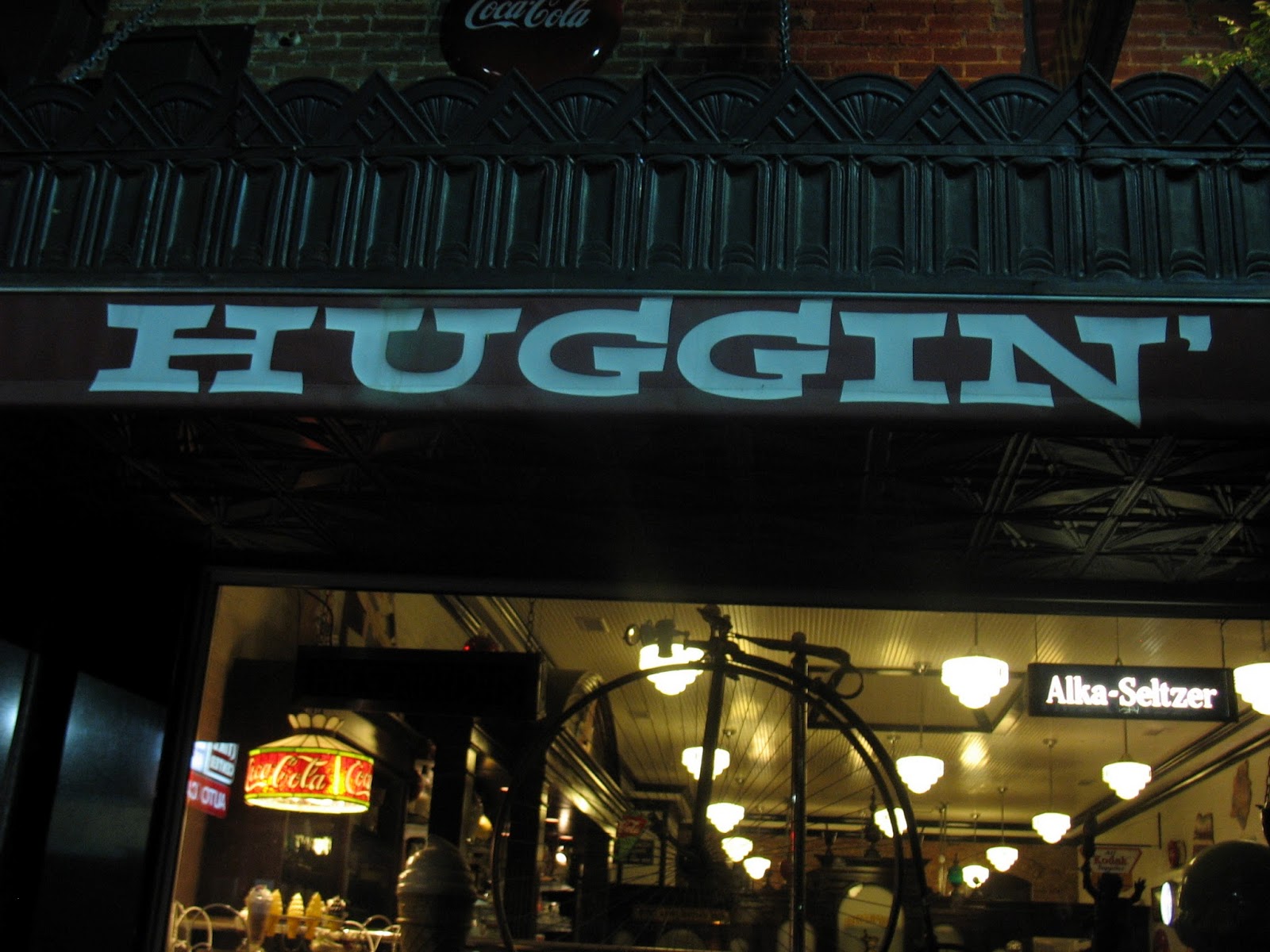


Huggin' Molly's was pretty cool inside.  Besides featuring a totally cool movie poster of "To Kill a Mockingbird", it was set up like a pharmacy and soda fountain.


These pictures don't really reflect my experience with Abbeville.  They're what I saw on the outside, but I actually spent most of my time immersed in library books like some demented Hermione Granger, and that's where I found the Abbeville I was seeking.


On to Alabama - Mississippi

Candy for the road.  It's a long drive.


All that candy reminds me of something.  I've been feeling as though I must be gaining weight with all those chile rellenos, beignets and the odd milkshake, not to mention M&M's while driving, and I feel bulky.  But according to a scale in the fitness room of a recent hotel, I'm actually a couple of pounds lighter.  Then I weighed myself again after only half an hour of exercise and I'd lost nearly 2 pounds of sweat...in half an hour!  No wonder I feel bulky:  it's hot and I'm keeping well hydrated, so I'm probably carrying around several quarts of water at any given moment.  Just thought you'd like to know that.  :-)


Another Tripod.  (And if you'd read the books you'd think these is cool as we do.)


Our first view of the Gulf.


This is Jefferson Davis' final home, Beauvoir.  We toured it.  Beauvoir, which means "beautiful view", sustained a lot of damage in Hurricane Katrina, and has been nicely restored.  Workers are busy on the grounds putting in Varina Davis' original 1-acre rose garden.

Hurricane Katrina was the costliest natural disaster, as well as one of the five deadliest hurricanes, in the history of the United States.  Among recorded Atlantic hurricanes, it was the sixth strongest overall. At least 1,833 people died in the hurricane and subsequent floods.


The entrance hall.  These are the home's original paint colors.


 I want this pink chair for Hailey!


I just read somewhere recently about dresser sets like this one, which contained 7 or more pieces, and I wonder what they all are.  Pitcher, basin and chamber-pot I know, but what about the rest?


  Jefferson Davis.

Jefferson Finis Davis (June 3, 1808 – December 6, 1889) was an American statesman and leader of the Confederacy during the American Civil War, serving as President of the Confederate States of America for its entire history, from 1861 to 1865.  (Note: We learned that he was named "Finis", French for "the end", because his mother gave birth to him at age 47!  Jefferson was not amused and never used his middle name.)

Davis was born in Kentucky to Samuel and Jane (Cook) Davis. After attending Transylvania University, Davis graduated from West Point and fought in the Mexican–American War as the colonel of a volunteer regiment named the Mississippi Rifles. He served as the United States Secretary of War under Democratic President Franklin Pierce. Both before and after his time in the Pierce administration, he served as a Democratic U.S. senator representing the state of Mississippi. As a senator, he argued against secession, but did agree that each state was sovereign and had an unquestionable right to secede from the Union.

On February 9, 1861, after Davis resigned from the United States Senate on the eve of the Civil War, he was selected to be the provisional President of the Confederate States of America; he was elected without opposition to a six-year term that November. During his presidency, Davis took charge of the Confederate war plans but was unable to find a strategy to stop the larger, more powerful and better-organized Union. His diplomatic efforts failed to gain recognition from any foreign country, and he paid little attention to the collapsing Confederate economy, printing more and more paper money to cover the war's expenses.

Historians have criticized Davis for being a much less effective war leader than his Union counterpart Abraham Lincoln, which they attribute to Davis being overbearing, controlling, and overly meddlesome, as well as being out of touch with public opinion, and lacking support from a political party (since the Confederacy had no political parties).  His preoccupation with detail, reluctance to delegate responsibility, lack of popular appeal, feuds with powerful state governors, inability to get along with people who disagreed with him, and neglect of civil matters in favor of military ones all worked against him.  (This isn't what we heard about at Beauvoir, where we were told what a kind, generous and well-liked  man he was.) 

After Davis was captured on May 10, 1865, he was charged with treason. Although he was not tried, he was stripped of his eligibility to run for public office; Congress posthumously lifted this restriction in 1978, 89 years after his death.  (Haha!  Fat lot of good it does him then!)  While not disgraced, he was displaced in Southern affection after the war by the leading Confederate general, Robert E. Lee. However, many Southerners empathized with his defiance, refusal to accept defeat, and resistance to Reconstruction. Over time, admiration for his pride and ideals made him a Civil War hero to many Southerners, and his legacy became part of the foundation of the postwar New South.  By the late 1880s, Davis began to encourage reconciliation, telling Southerners to be loyal to the Union.

He was aided in the last decade of his life by the generosity of Sarah Anne Ellis Dorsey, a wealthy widow, who invited him to her plantation, Beauvoir, near Biloxi, Mississippi, which she eventually bequeathed to him, along with funds for his support.  This enabled him to live in some comfort with his wife until his death in 1889.  (Wikipedia)


 We've been dying to get to a beach, but we only spent a few minutes here.  It was the end of the day and the water looked brown and yucky.  But the powdery white sand was lovely.


My beautiful children.


  See it?


We drove for miles over swampy areas on these raised roads.


Alabama highway.


The Ice Box.  We saw a bunch of these serve-yourself ice houses.


I took this picture to show the red soil.  It's really beautiful in contrast with the luscious greenery and blue sky.


We're headed to Abbeville, home of the 15th Alabama, but tonight we only made it as far as Enterprise.  

On the west coast, main highways run north and south - Hwy 5, Hwy 101, and the lovely Hwy 1 along the California coast.  Then to go east-west you have to take a smaller highway.  For most of our drive, however, it's been the opposite.  East-west interstates - Hwy 10, 40, 70, 80 and 90, counting south to north - are easy to find.  But moving north or south takes some doing, so we had to zig-zag along for much of the first part of our trip.  Now that we're nearly on the east coast, it's reversed again.  So we were able to take a major highway up to Enterprise, but to get to Abbeville to the east is going to take a bit of wandering along smaller highways.  Quite a bit, as it turns out.